
Premium Rubber Tubing for Laboratory Apparatus: Flexible, Durable, and Essential
In the precise world of scientific research and industrial quality control, every component matters. High-quality rubber tubing is a fundamental yet critical element in countless laboratory setups, serving as the vital link between apparatus. Our industrial-grade rubber tubing is engineered to meet the rigorous demands of modern laboratories, offering superior flexibility, chemical resistance, and longevity. Understanding the full rubber tubing laboratory apparatus function is key to ensuring system integrity, safety, and reliable results in applications from fluid transfer to gas delivery.
Product Overview
Our professional-grade rubber tubing is specifically manufactured for B2B and industrial laboratory use. It is designed to perform reliably under a wide range of conditions, connecting essential pieces of laboratory apparatus such as condensers, aspirators, Bunsen burners, and filtration systems. The primary function of this tubing is to provide a secure, leak-proof, and flexible conduit for liquids, gases, and vapors. Available in various inner diameters, wall thicknesses, and compound formulations, our tubing ensures compatibility with diverse chemical, thermal, and mechanical requirements, making it an indispensable component in any lab's inventory.
Key Features
- Superior Material Formulations: Offered in multiple compounds including Natural Rubber (Latex), EPDM, and Silicone, each providing specific benefits for chemical resistance, temperature range, and flexibility.
- Excellent Flexibility & Kink Resistance: Maintains an open lumen under bending, ensuring consistent flow and preventing interruptions in critical processes.
- Broad Chemical Compatibility: Formulated to resist degradation from a wide array of laboratory chemicals, water, and mild solvents, preserving the purity of conveyed media.
- High-Temperature Resilience: Select grades withstand elevated temperatures from autoclaving or hot fluid transfer, ensuring performance stability.
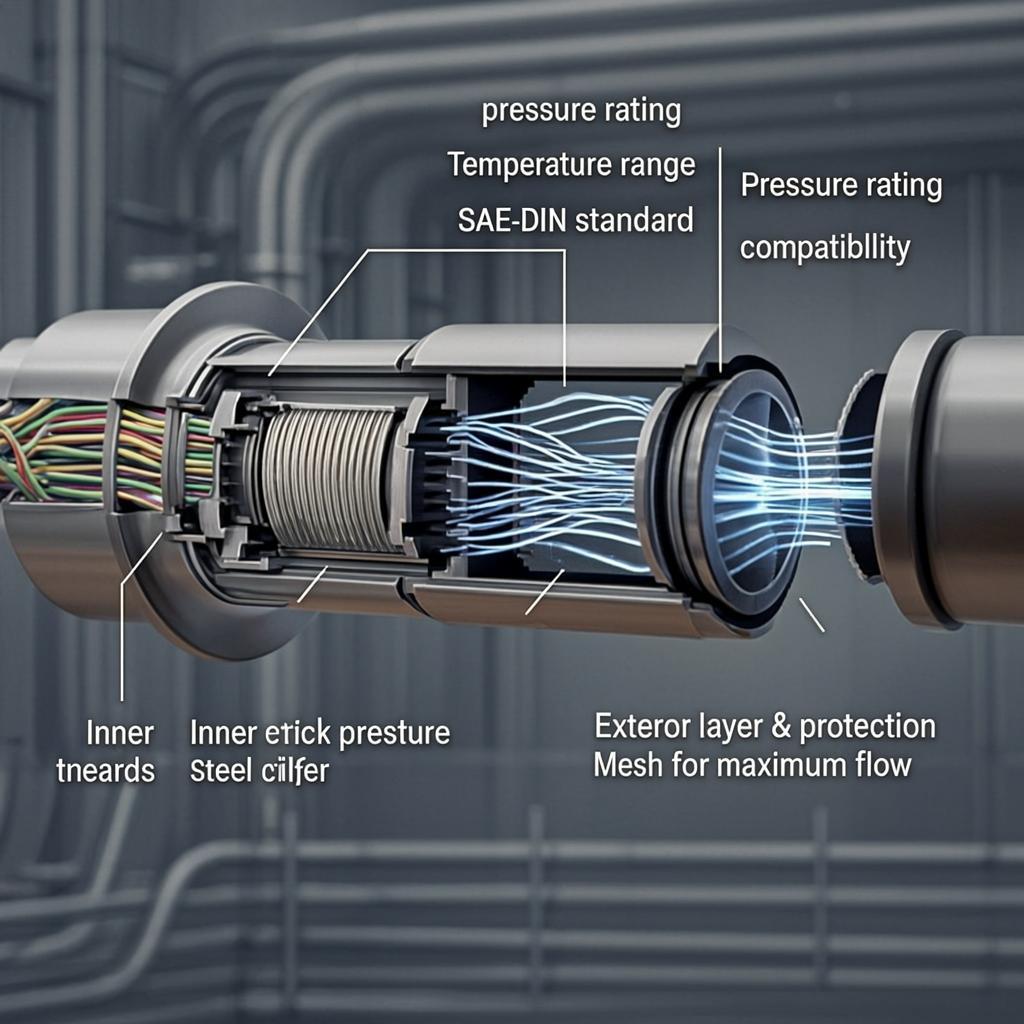
- Reinforced Construction: Options with fabric or wire reinforcement are available for applications requiring extra pressure resistance or vacuum support.
- Precision Sizing: Consistent inner and outer diameters ensure a secure fit on standard glassware and equipment, minimizing the risk of leaks or disconnections.
Technical Specifications
| Parameter | Specification Details |
|---|---|
| Available Materials | Natural Rubber (Latex), EPDM, Silicone, Reinforced Composites |
| Standard Inner Diameter (ID) | 3mm, 5mm, 6mm, 8mm, 10mm, 12mm (Custom sizes available) |
| Wall Thickness | 1.5mm, 2mm, 2.5mm, 3mm (Standard) |
| Temperature Range | -60°C to +250°C (Varies by material; Silicone offers widest range) |
| Primary Color | Black (Standard), Red, White (Material dependent) |
| Certifications | ISO 9001, REACH, RoHS Compliant, USP Class VI (Select grades) |
| Packaging | Coiled in lengths of 10m, 25m, 50m, or bulk spools |
Application Scenarios
The versatile rubber tubing laboratory apparatus function makes it suitable for a multitude of settings. In educational laboratories, it is commonly used to connect water taps to condensers for distillation or to provide gas to Bunsen burners. Within research and development and analytical chemistry labs, it facilitates vacuum filtration setups, transfers cooling fluids in recirculating chillers, and connects components in custom gas sampling or reaction systems. In pharmaceutical and biotechnology environments, specific-grade tubing is used in peristaltic pumps for sterile fluid handling or in equipment requiring biocompatible materials. Its role is foundational wherever a reliable, flexible connection is needed between static and dynamic parts of a laboratory apparatus.
Advantages Over Standard Tubing
- Enhanced Durability: Resists ozone, weathering, and fatigue cracking, leading to a longer service life and reduced replacement frequency.
- Optimized for Lab Use: Unlike generic tubing, our products are designed with laboratory-specific challenges in mind, such as exposure to lab chemicals and repeated autoclaving.
- Safety-First Design: Materials are selected to minimize particulate shedding and prevent contamination of sensitive processes, a critical factor in QC and R&D labs.
- Cost-Effective Operation: Reduced failure rates and longer intervals between changes lower total cost of ownership and minimize downtime in production or research schedules.
Why Choose Our Rubber Tubing?
We are a specialized manufacturer focused on industrial and laboratory fluid transfer components. Our deep understanding of the rubber tubing laboratory apparatus function allows us to provide not just a product, but a solution. We offer comprehensive technical support to help you select the perfect tubing grade for your specific application, ensuring chemical compatibility and performance. Our commitment to consistent quality, backed by international certifications, guarantees that every meter of tubing meets stringent standards. With flexible bulk ordering, reliable global logistics, and a partner-oriented approach, we supply the essential components that keep the world's laboratories running smoothly and safely.
Frequently Asked Questions (FAQ)
Q1: How do I select the right rubber tubing material for my application?
A: The choice depends on three key factors: the chemicals it will contact, the temperature range required, and any need for flexibility or reinforcement. For general water and air connections, natural rubber is cost-effective. For solvents and oils, EPDM is superior. For high heat or sterile applications, silicone is recommended. Our technical team can assist with specific compatibility charts.
Q2: Can your tubing withstand autoclave sterilization?
A: Yes, our silicone and specific EPDM grades are designed to withstand repeated autoclaving cycles (typically 121°C at 15 psi) without significant degradation or loss of elasticity, making them ideal for microbiology and life science labs.
Q3: What is the primary function of reinforced tubing in a lab setting?
A: Reinforced tubing, often with a fabric or wire braid, is crucial for applications involving suction or vacuum (like filtration) to prevent the tube from collapsing under negative pressure. It's also used for higher-pressure fluid delivery to contain the force safely.
Q4: Do you offer custom sizing or printing?
A: Absolutely. We cater to B2B clients with needs for non-standard inner/outer diameters, specific wall thicknesses, or custom colors for coding purposes. Striping or custom printing for part numbers or logos is also available for large-volume orders.
Q5: Why is the consistent sizing of the tubing so important for laboratory apparatus function?
A: Consistent inner and outer diameters are critical for achieving a secure, leak-proof connection to glassware, plastic fittings, and metal stems. A proper seal is fundamental to maintaining system pressure/vacuum, ensuring accurate flow rates, and most importantly, guaranteeing user safety by preventing leaks of hazardous materials. This precision is a core aspect of reliable rubber tubing laboratory apparatus function.
