
Premium Laboratory Rubber Tubing: Flexible, Durable, and Chemically Resistant
In the precise world of scientific research and industrial processes, the reliability of every component is paramount. Our premium laboratory rubber tubing is engineered to meet the rigorous demands of modern labs, offering exceptional flexibility, durability, and chemical resistance. Designed for a vast array of rubber tubing uses in laboratory settings, from fluid transfer to gas delivery systems, this tubing ensures leak-free connections and consistent performance. It is an indispensable tool for professionals seeking to enhance the safety, efficiency, and reproducibility of their experimental workflows.
1. Product Overview
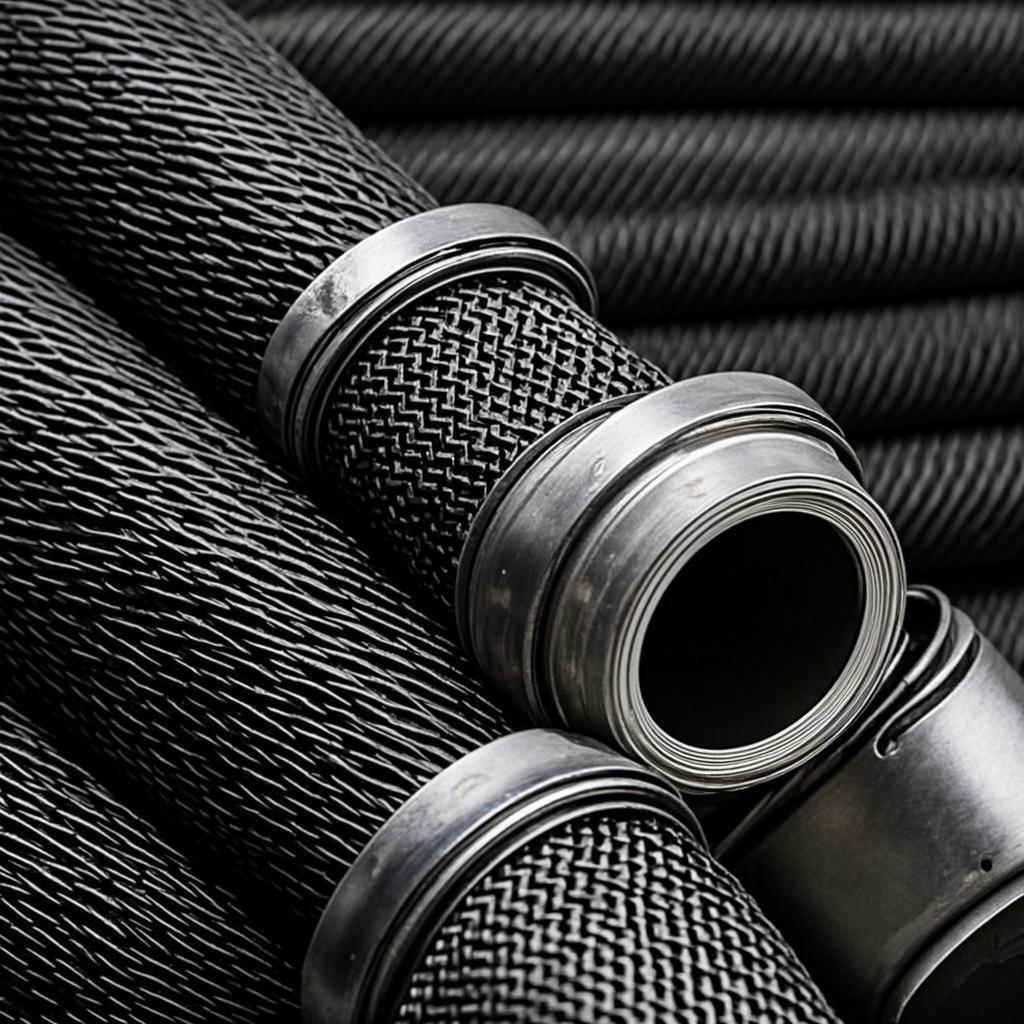
Our high-grade rubber tubing is specifically formulated for laboratory and light industrial applications. Manufactured from premium synthetic rubber compounds, it provides an optimal balance of elasticity and strength, capable of withstanding repeated use, bending, and clamping without cracking or permanent deformation. The tubing's smooth inner bore minimizes flow resistance and prevents particulate buildup, making it ideal for both aqueous solutions and mild chemical transfer. Understanding the diverse rubber tubing uses in laboratory environments, we offer a product that serves as a versatile and reliable connective solution for peristaltic pumps, condensers, Bunsen burners, and vacuum lines, among many other applications.
2. Key Features
- Superior Chemical Resistance: Formulated to resist degradation from a wide range of chemicals, oils, and solvents commonly used in labs, ensuring longevity and material integrity.
- Excellent Flexibility & Kink Resistance: Remains pliable across a broad temperature range, allowing for easy routing and connection without collapsing or kinking, which is critical for consistent fluid flow.
- High-Temperature Tolerance: Withstands elevated temperatures encountered in autoclaving, steam lines, and connections to hot apparatus, maintaining its structural properties.
- Reinforced Durability: Resists abrasion, ozone, and aging, providing a longer service life and reducing the frequency of replacement, which lowers long-term operational costs.
- Non-Toxic & Compliant: Manufactured to meet international standards for laboratory safety, ensuring the tubing does not leach contaminants that could compromise sensitive experiments or processes.
3. Technical Specifications
| Parameter | Specification |
|---|---|
| Material | Synthetic Rubber Compound (EPDM/Silicone options available) |
| Standard Color | Black (Custom colors available for coding purposes) |
| Inner Diameter (ID) Range | 3 mm to 25 mm (1/8" to 1") |
| Wall Thickness | Standard: 1.5mm - 3mm (Customizable) |
| Temperature Range | -40°C to +150°C (Short-term peaks to 180°C) |
| Pressure Rating | Up to 5 bar (72.5 psi) depending on ID and wall thickness |
| Standards Compliance | ISO, REACH, RoHS; FDA-compliant options for specific grades |
| Packaging | Coiled in clear poly bags, boxed; bulk reels available |
4. Application Scenarios
The versatility of our tubing is demonstrated in its wide range of rubber tubing uses in laboratory and related technical fields:
- Fluid Transfer & Peristaltic Pumping: Ideal for moving culture media, buffers, and reagents with precision, thanks to its consistent inner diameter and pump compatibility.
- Distillation & Condensation Setups: Used as connective tubing for condensers and distillation apparatus, handling vapors and cooled liquids efficiently.
- Gas Delivery Systems: Connects gas cylinders to Bunsen burners, fume hoods, or reaction setups, providing a secure seal for natural gas, air, or inert gases.
- Vacuum Lines: Employed in vacuum filtration, desiccators, and rotary evaporators, where its collapse resistance is essential.
- General Purpose Connections: Links various glassware, instruments, and taps for water, drainage, or coolant circulation in spectroscopy and chromatography systems.
5. Advantages Over Standard Tubing
Choosing our specialized laboratory rubber tubing provides distinct operational benefits that directly impact lab productivity and safety.
- Enhanced Safety Profile: Reduced risk of leaks, sudden failures, or chemical degradation protects personnel and valuable samples.
- Optimized for Laboratory Use: Unlike generic tubing, it is specifically engineered for the chemical and physical stresses unique to lab environments.
- Cost-Effective Operation: Extended service life and reliability minimize downtime for replacements and prevent costly experimental errors due to tubing failure.
- Process Consistency: Reliable performance ensures consistent flow rates and connections, which is critical for reproducible results in research and quality control.
6. Why Choose Our Laboratory Rubber Tubing
We are more than just a supplier; we are a partner in your scientific and industrial endeavors. Our commitment to quality is evident in every meter of tubing we produce.
- Rigorous Quality Control: Every batch undergoes stringent testing for dimensions, durometer (hardness), elongation, and chemical resistance to guarantee performance.
- Technical Expertise & Support: Our team understands the intricacies of rubber tubing uses in laboratory settings and can provide expert guidance on material selection and application suitability.
- Customization Capabilities: We offer custom sizing, coloring, and compounding to meet unique OEM requirements or specific experimental protocols.
- Global Supply Chain Reliability: With a robust logistics network, we ensure timely delivery to manufacturing plants, research institutions, and distributors worldwide.
- Commitment to Compliance: Our products are developed with global regulatory standards in mind, simplifying your procurement and compliance processes.
7. Frequently Asked Questions (FAQ)
Q1: What is the primary difference between your rubber tubing and standard PVC tubing?
A: Our synthetic rubber tubing offers superior flexibility, a wider temperature range, and better resistance to kinking and certain chemicals (like oils and solvents) compared to standard PVC. PVC can become brittle in cold temperatures and may not be suitable for all organic solvents.
Q2: Is this tubing autoclavable?
A: Yes, our standard EPDM-based laboratory rubber tubing is fully autoclavable (up to 121°C at 15 psi) and can withstand repeated sterilization cycles without significant degradation, making it perfect for aseptic techniques and microbiology work.
Q3: How do I select the correct inner diameter and wall thickness?
A: Selection depends on the application. For peristaltic pumps, refer to the pump manufacturer's specifications. For general fluid or gas flow, choose an ID that matches your connector barbs and provides the desired flow rate. Thicker walls offer higher pressure resistance and durability. Our technical team can assist you with this decision.
Q4: Do you offer tubing suitable for food or pharmaceutical contact?
A: Absolutely. We supply specific grades of silicone rubber tubing that are compliant with FDA (Food and Drug Administration) regulations for food contact and USP (United States Pharmacopeia) Class VI standards for pharmaceutical applications. Please inquire about these specialized options.
Q5: Can I order custom lengths or have the tubing printed with markings?
A: Yes, we provide tubing cut to your specified lengths to reduce waste and improve convenience. We also offer custom color stripes or printing for identification and coding purposes in complex laboratory setups, enhancing organization and safety.
Upgrade your laboratory's infrastructure with tubing built for precision and endurance. Contact our sales team today for a quote, to request free samples, or to consult with our technical experts on your specific application needs.
