
Your Ultimate Guide to Industrial Rubber Tubing: Types, Specs & Applications
In the complex world of industrial fluid and gas transfer, selecting the correct conduit is paramount to system integrity, safety, and efficiency. Understanding the various types of rubber tubing is the first critical step. Our premium-grade industrial rubber tubing is engineered to meet the rigorous demands of diverse sectors, offering superior flexibility, durability, and chemical resistance. Designed for B2B procurement, this product line provides reliable solutions for hydraulic systems, pneumatic controls, material transfer, and more, ensuring optimal performance under pressure and in challenging environments.
Key Features of Our Industrial Rubber Tubing
Our product stands out in the marketplace due to a combination of advanced engineering and high-quality material formulation. We cater to professionals who cannot compromise on performance.
- Superior Material Composition: Fabricated from synthetic compounds like NBR, EPDM, SBR, and Silicone, each formulation is tailored for specific operational challenges including oil, ozone, temperature extremes, and weathering.
- Enhanced Reinforcement: Features high-tensile textile or steel wire braiding to withstand high working pressures and prevent deformation under vacuum or suction conditions.
- Exceptional Flexibility & Kink Resistance: Maintains flow efficiency even in tight spaces and complex routing, reducing installation time and potential flow restrictions.
- Broad Temperature & Media Compatibility: Engineered to perform consistently across a wide temperature range while resisting degradation from oils, fuels, chemicals, and water.
- Durable Construction: Resists abrasion, cracking, and weathering, leading to extended service life and reduced total cost of ownership through fewer replacements.
Technical Specifications
Selecting the right tubing requires precise data. The table below outlines the core specifications for our primary types of rubber tubing. Custom diameters, lengths, and reinforcement levels are available upon request.
| Tubing Type (Material) | Standard Inner Diameter Range | Standard Wall Thickness | Temperature Range | Key Media Compatibility | Common Reinforcement |
|---|---|---|---|---|---|
| NBR (Nitrile) | 3mm - 100mm | 2mm - 6mm | -30°C to +100°C | Oils, fuels, greases, water | Textile Braid |
| EPDM | 5mm - 150mm | 2.5mm - 8mm | -40°C to +125°C | Hot water, steam, ozone, weathering | Textile / Wire Braid |
| SBR (General Purpose) | 4mm - 80mm | 1.5mm - 5mm | -20°C to +70°C | Air, water, mild chemicals | Spiral Wire (for suction) |
| Silicone | 2mm - 50mm | 1mm - 4mm | -60°C to +200°C | Food-grade, medical, hot air | None / Textile (for pressure) |
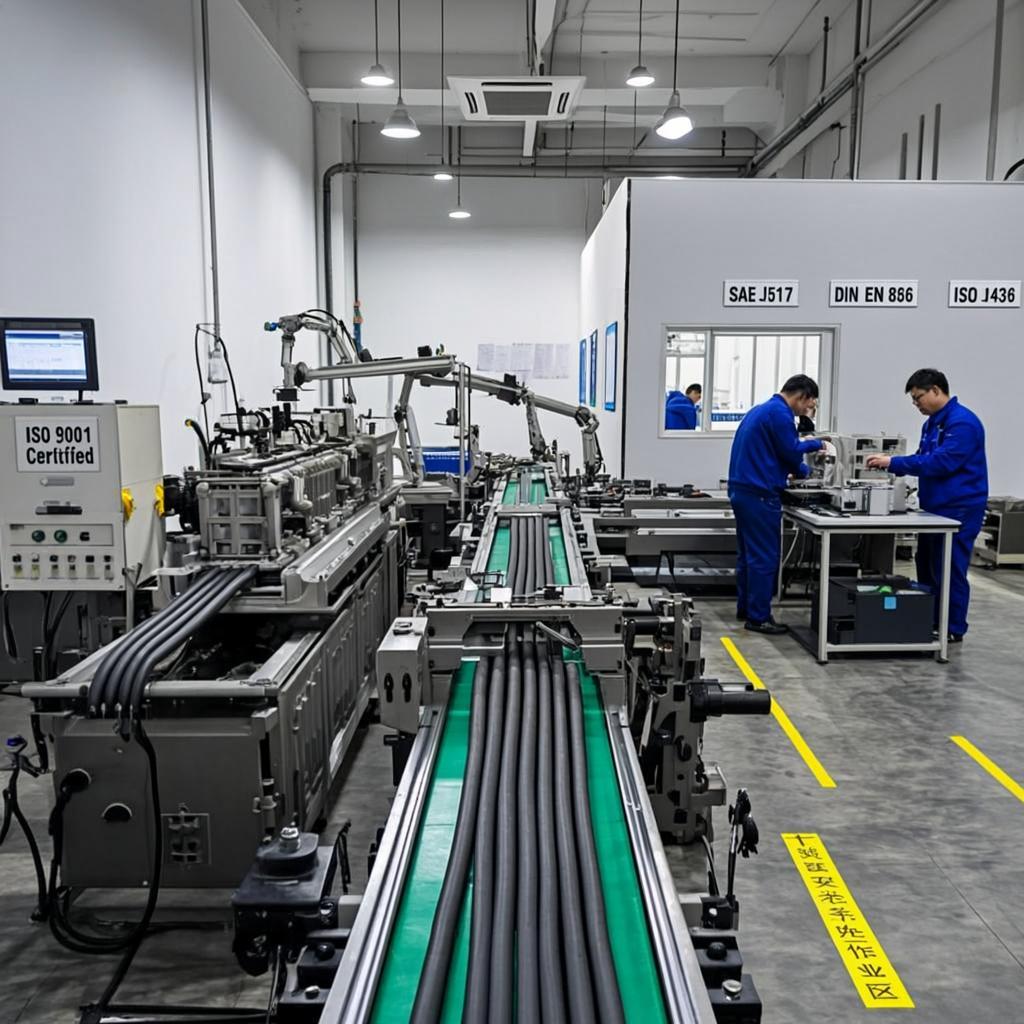
Note: All tubing complies with relevant international standards such as ISO, SAE, and FDA (for specific grades). Pressure ratings are diameter and reinforcement dependent.
Application Scenarios
The versatility of our types of rubber tubing makes them indispensable across numerous industries. Correct selection ensures safety, efficiency, and longevity.
- Manufacturing & Automation: Pneumatic control lines, hydraulic machinery, coolant transfer, and robotic actuator supply lines.
- Automotive & Transportation: Fuel lines, brake system hoses (non-brake fluid), air intake ducts, and coolant hoses for vehicles and heavy equipment.
- Chemical & Processing: Transfer of mild to moderate chemical solutions, drainage, and exhaust lines where chemical resistance is critical.
- Agriculture: Irrigation systems, sprayer lines, and hydraulic systems on tractors and harvesting equipment.
- Construction & Mining: High-pressure water jetting, air supply for tools, dust extraction, and slurry transfer in demanding site conditions.
- Food & Beverage: Silicone and FDA-approved tubing for liquid transfer, steam lines, and product handling in processing plants.
Advantages Over Standard Alternatives
Choosing our specialized industrial tubing delivers measurable benefits to your operations and bottom line.
- Optimized Performance: Each compound is engineered for a specific set of conditions, ensuring better performance than generic, one-type-fits-all tubing.
- Reduced Downtime: High resistance to wear, pressure, and environmental factors minimizes unexpected failures and maintenance intervals.
- Cost Efficiency: Longer service life and reliability translate to a lower total cost of ownership despite a potentially higher initial investment.
- Safety & Compliance: Manufactured to meet stringent international industry standards, reducing risk and ensuring regulatory compliance.
- System Design Flexibility: Available in a wide range of sizes and configurations to fit both existing systems and new designs seamlessly.
Why Choose Us as Your Rubber Tubing Supplier
We are more than just a distributor; we are a technical partner dedicated to your success. Our expertise in the various types of rubber tubing ensures you get the right product for your exact application.
- Deep Technical Expertise: Our team provides consultative support to help you navigate material selection, pressure ratings, and chemical compatibility.
- Global Quality Standards: We source and manufacture products that consistently meet ISO, SAE, and other critical certifications for worldwide use.
- Extensive Inventory & Customization: With a vast stock of standard sizes and the capability for custom cuts, lengths, and fittings, we fulfill orders promptly and precisely.
- Proven B2B Logistics: We understand global supply chain needs, offering reliable, tracked shipping and export documentation for smooth international trade.
- Commitment to Partnership: We build long-term relationships based on consistent quality, competitive pricing, and responsive customer service.
Frequently Asked Questions (FAQ)
Q1: How do I choose between NBR and EPDM tubing?
A: The choice hinges on the media. Use NBR tubing for applications involving petroleum-based oils, fuels, and greases. Choose EPDM tubing for systems with hot water, steam, ozone exposure (like outdoor applications), or brake fluids. Our team can help you decide.
Q2: Can your tubing be used for food-grade applications?
A: Yes, but only specific grades. Our Silicone rubber tubing is available in FDA-compliant and other food-contact material formulations. Please specify your food-grade certification requirements when inquiring.
Q3: What is the difference between suction hose and pressure hose?
A: Suction hoses (often with a spiral wire reinforcement) are designed to resist collapse under vacuum conditions. Pressure hoses (with braided reinforcement) are built to contain and withstand internal pressure. Some hoses are rated for both. The application dictates the type needed.
Q4: Do you offer custom-cut lengths and printing/marking?
A: Absolutely. We provide custom cutting to your specified lengths to minimize waste. We can also add custom printing, such as part numbers, size info, or company logos, for traceability and branding.
Q5: What are your minimum order quantities (MOQs) for international orders?
A: Our MOQ policy is flexible to accommodate both large projects and sample orders for testing. We work with businesses of all sizes. Contact our sales team with your specific needs for a tailored quote.
Ready to specify the perfect tubing for your project? Contact our technical sales team today for expert guidance, a detailed quote, or to request material samples. We are here to ensure your fluid and gas transfer systems are built on a foundation of reliability and quality.
