
Precision Rubber Tubing: Your Guide to Sizing and Selection for Industrial Applications
Selecting the correct rubber tubing is critical for the safety, efficiency, and longevity of your fluid transfer systems. A fundamental step in this process is accurate measurement. This comprehensive guide not only details our high-performance rubber tubing but also provides clear instructions on how to measure rubber tubing to ensure a perfect fit for your specific application, preventing leaks and system failures.
1. Product Overview
Our industrial-grade rubber tubing is engineered for durability and reliability across demanding environments. Manufactured from premium synthetic compounds, it offers exceptional resistance to abrasion, weathering, and a wide range of chemicals, oils, and temperatures. Available in various formulations including EPDM, Nitrile (NBR), Neoprene, and Silicone, this tubing is designed to provide a flexible, yet robust solution for conveying air, water, fuels, hydraulic fluids, and other media in manufacturing, automotive, agricultural, and processing industries.
2. Key Features
- Superior Material Formulations: Tailored compounds for specific resistances (ozone, UV, temperature, chemical).
- Enhanced Flexibility & Kink Resistance: Maintains flow efficiency even in tight installations.
- Reinforced Construction: Textile or steel wire braiding options available for high-pressure applications.
- Precision Dimensional Tolerances: Consistent inner diameter (ID) and outer diameter (OD) for reliable connections.
- Long Service Life: Resists degradation, cracking, and swelling to reduce maintenance costs and downtime.
3. Technical Specifications
Understanding the specifications is key after you know how to measure rubber tubing for replacement or new designs. Below are standard specifications for our general-purpose oil-resistant tubing (NBR). Custom sizes and compounds are available upon request.
| Parameter | Specification | Notes |
|---|---|---|
| Standard Material | Nitrile Butadiene Rubber (NBR) | Excellent oil & fuel resistance. |
| Standard Sizes (ID) | 3mm to 100mm | Custom diameters available. |
| Wall Thickness | 1.5mm to 10mm | Varies based on ID and pressure rating. |
| Temperature Range | -30°C to +100°C | Short peaks up to 120°C possible. |
| Pressure Rating (Max) | Up to 25 Bar | Dependent on size and reinforcement. |
| Color | Black (Standard), Red, Blue, Yellow | For coding or identification. |
4. Application Scenarios
Our versatile rubber tubing is specified by engineers and procurement specialists worldwide for critical transfer tasks:
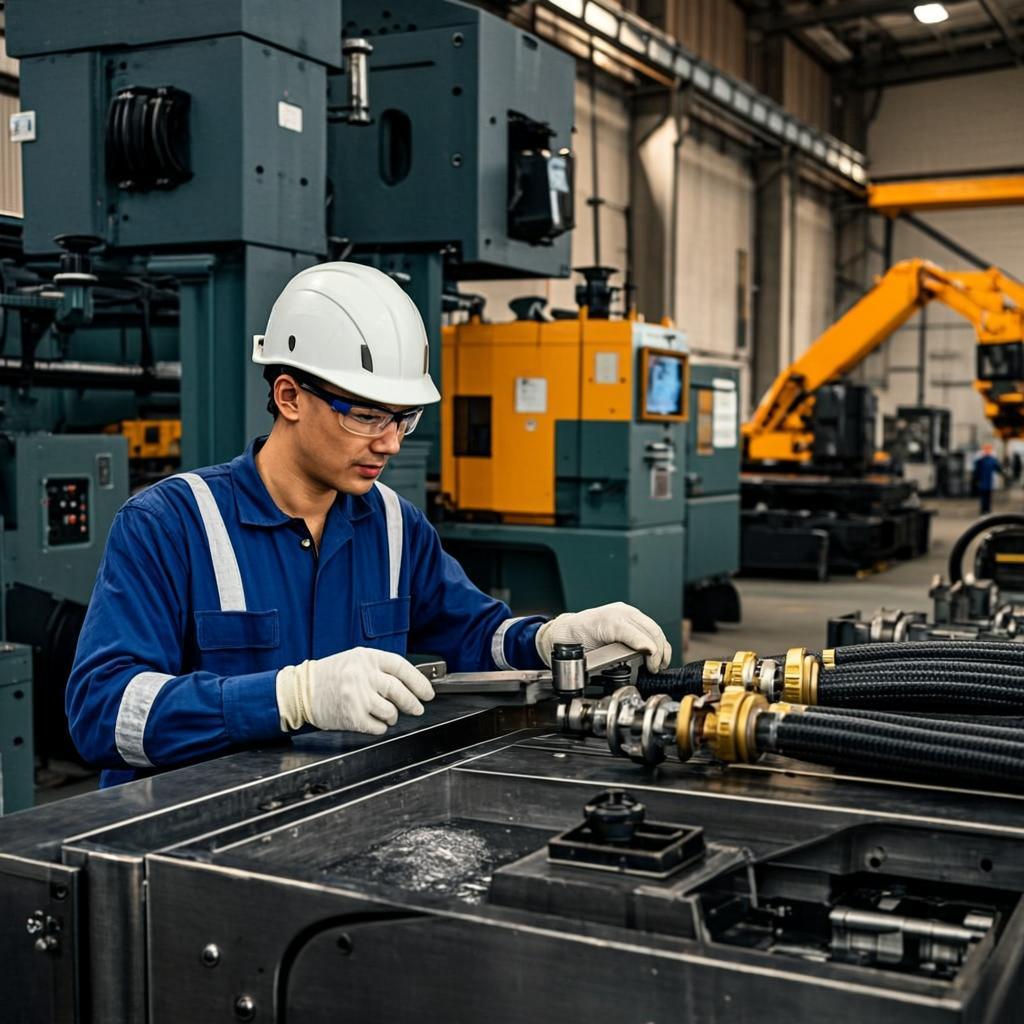
- Automotive & Machinery: Fuel lines, coolant hoses, air brake lines, lubrication systems.
- Manufacturing & Pneumatics: Compressed air delivery, tool air supply, suction lines.
- Food & Beverage Processing: USDA and FDA-compliant tubing for liquid transfer (specific compounds).
- Agricultural Equipment: Hydraulic fluid lines, sprayer hoses, water transfer.
- General Industrial: Drainage, wash-down systems, low-pressure chemical transfer.
5. Advantages
Choosing our rubber tubing translates into direct operational benefits:
- Leak-Free Performance: Precise dimensions ensure secure fitting connections when proper measurement techniques are used.
- Reduced Total Cost of Ownership: Exceptional durability minimizes replacement frequency and maintenance interventions.
- Operational Safety: High-quality materials withstand pressure and environmental stress, mitigating failure risks.
- Application-Specific Solutions: We provide guidance not just on the product, but on the selection process, including how to measure rubber tubing accurately.
- Global Compliance: Tubing can be manufactured to meet international standards like SAE, DIN, and ISO.
6. Why Choose Us
As a leading manufacturer and exporter, we offer more than just a product; we offer a partnership grounded in expertise and reliability.
- In-House Manufacturing & QC: Full control over production ensures consistent, high-quality output with batch-to-batch uniformity.
- Technical Expertise & Support: Our engineering team assists with material selection, sizing, and troubleshooting, providing expert advice on how to measure rubber tubing for complex applications.
- Customization Capability: We specialize in producing custom-sized, colored, and compounded tubing to meet unique OEM requirements.
- Global Logistics Network: Reliable and efficient shipping to major ports worldwide, supported by comprehensive export documentation.
- B2B Focus: We understand the needs of bulk industrial procurement, offering competitive pricing, volume discounts, and dedicated account management.
7. FAQ
Q1: What is the correct way to measure rubber tubing for replacement?
A: The most crucial measurements are the Inner Diameter (ID) and Wall Thickness.
- For ID: If the tubing is not connected, use a caliper to measure the internal opening directly. If it's on a fitting, carefully cut a sample and measure.
- For OD: Measure the total outside width with a caliper.
- Wall Thickness: Can be calculated as (OD - ID) / 2. For reinforced hose, measure the rubber layer only if possible.
Q2: My old tubing has perished. How do I choose the right material?
A: Identify the fluid being conveyed and the operating temperature. For oils and fuels, Nitrile (NBR) is standard. For hot water or steam, EPDM is superior. For high-temperature air or food-grade applications, consider Silicone. Our technical team can help you select based on your media compatibility chart.
Q3: Do you offer samples before bulk order?
A: Yes, we provide sample lengths for material verification and fit-testing. This allows you to confirm dimensions, flexibility, and connection integrity before committing to a full production run.
Q4: What is your typical lead time for custom orders?
A: Lead times vary based on compound and quantity. Standard custom orders typically ship within 15-25 working days. We provide firm timelines upon order confirmation and keep you updated throughout production.
Q5: Can you print custom markings or labels on the tubing?
A: Absolutely. We offer continuous printing (striping, brand names, size indicators) or custom labeling to meet OEM identification and safety standards.
