Auto Timing Belt technology depends heavily on the quality of rubber compounding and material selection. In both the hydraulic hose and power transmission belt industries, the underlying chemistry that determines resistance to heat, oil, and wear is remarkably similar. Understanding these shared principles helps engineers and procurement specialists make more informed choices about component longevity and system reliability.
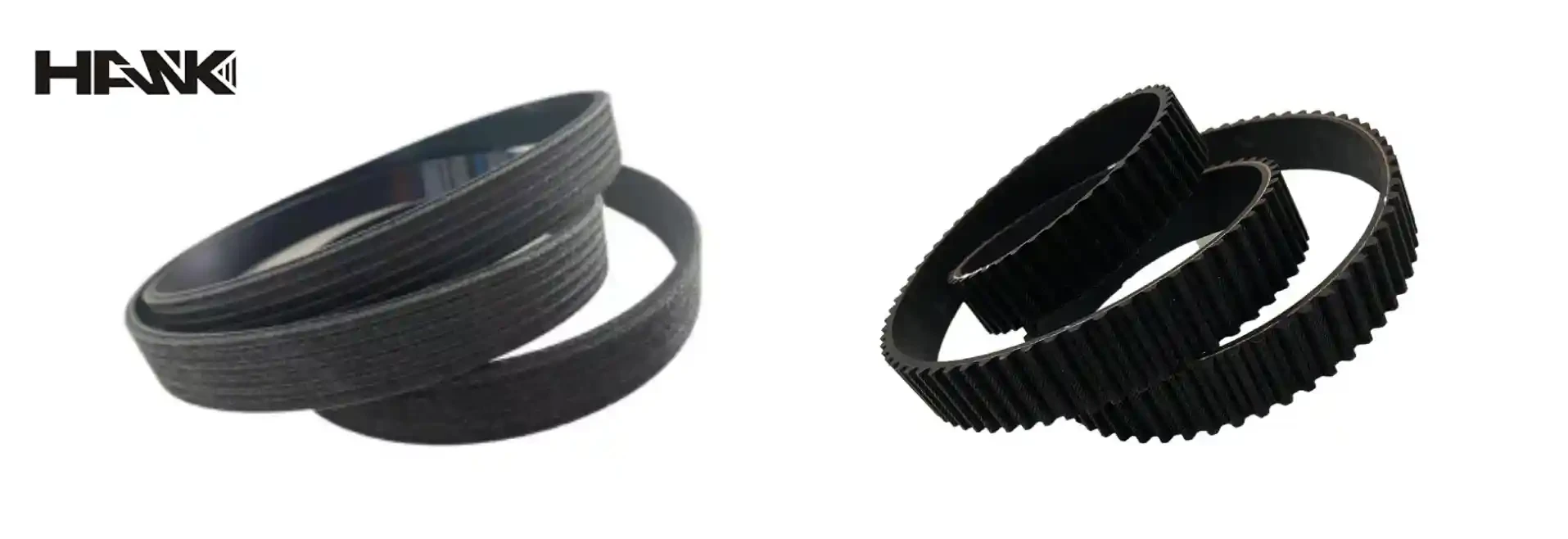
Rubber compounds used in hydraulic hoses and automotive belts typically start with a base polymer such as chloroprene (CR), nitrile rubber (NBR), or EPDM. Each offers distinct advantages: CR rubber provides excellent ozone and weathering resistance, while NBR excels in oil resistance. For applications where dynamic flexing and heat are constant—such as in engine drive systems—the choice of polymer and reinforcing fillers becomes critical. CR Rubber V Belt formulations, for instance, are engineered to maintain flexibility and tensile strength under repeated stress cycles.
The Role of Reinforcement and Curing Systems
Both hose and belt manufacturers rely on a precise balance of sulfur, accelerators, and anti-degradants to achieve optimal cure states. Over‑curing can lead to brittleness; under‑curing results in poor abrasion resistance. The addition of carbon black and silica fillers not only improves mechanical properties but also enhances thermal conductivity—an often overlooked factor in high‑speed belt applications where heat buildup shortens service life.
Modern compounding also incorporates process aids and coupling agents to ensure homogeneous dispersion of fillers. This directly impacts the long‑term stability of hose covers and belt backing materials. When hose assemblies are used in conjunction with power transmission systems—for example, in agricultural or construction equipment—matching the material properties of adjacent rubber components can reduce system‑wide failure rates.
Shared Challenges: Oil Resistance and Temperature Extremes
Hydraulic hoses often come into contact with petroleum‑based fluids, while engine belts operate in oily environments from blow‑by gases. In both cases, polymer selection and compounding must counteract swelling and degradation. Chloroprene rubber, for instance, offers a favorable balance of oil resistance and heat aging. The same formulation principles that extend the life of a hydraulic hose cover also apply to the tooth‑retention layer of a synchronous belt.
Temperature extremes present another common hurdle. In cold climates, belts must remain flexible to avoid cracking; hoses must resist embrittlement. Plasticizers and low‑temperature‑resistant polymers like polyurethane or silicone are occasionally blended into the compound. However, cost and processing constraints often steer manufacturers toward optimized CR or NBR formulations that meet most demands without exotic materials.
Quality Assurance Through Material Consistency
For buyers and engineers, consistent compound properties are more important than any single additive. Variations in Mooney viscosity, cure rate, or tensile strength can lead to premature failure in the field. Reputable rubber product manufacturers maintain strict incoming material testing and in‑process rheometer checks. This discipline ensures that both hoses and belts meet the specifications required for OEM and aftermarket replacements.
Ultimately, the performance of any rubber product—whether a hydraulic hose or an automotive belt—comes down to the expertise behind the compound. By understanding the interconnections between polymer chemistry, reinforcement, and curing, end‑users can better evaluate product quality and select components that will deliver reliable, long‑term service.