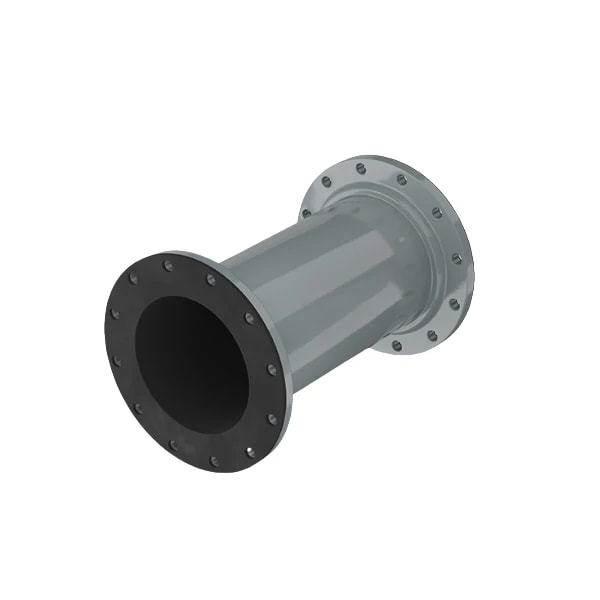
Selecting a rubber lined pipe sch80 configuration is an absolute necessity when dealing with severe pressure spikes and aggressive fluid dynamics in industrial hydraulics. The hydraulic and fluid control industry operates on the extreme edges of physical science, where the containment and directional flow of liquids under immense pressure dictate the efficiency of heavy machinery. In these demanding environments, the structural metal provides the necessary burst resistance, but it is the internal elastomer lining that dictates the fluid's laminar flow, protects against cavitation, and ensures the longevity of the entire hydraulic circuit.
Combating Cavitation and High-Pressure Wear
Cavitation—the formation and rapid collapse of vapor bubbles in a flowing liquid—is one of the most destructive forces in hydraulic and high-pressure fluid transfer systems. When these micro-bubbles implode against the inner wall of a bare metal pipe or hose fitting, they generate localized shockwaves that can pit and erode even the hardest steel alloys. Elastomer and synthetic rubber linings act as an acoustic and mechanical dampener. The inherent elasticity of the rubber absorbs the kinetic shock of cavitation implosions, dispersing the energy harmlessly across the polymer matrix. This phenomenon drastically reduces the rate of internal degradation, extending the maintenance intervals of hydraulic networks significantly.
Wall Thickness and Pressure Ratings
In high-pressure applications, the dimensional standards of the piping and hose network are non-negotiable. The Schedule 80 specification denotes a thicker wall dimension compared to standard piping, providing the necessary mechanical strength to handle elevated operational pressures. When this robust metal framework is combined with a precision-engineered rubber lining, the system achieves a synergistic effect. The metal handles the hoop stress generated by the hydraulic fluid, while the rubber lining prevents chemical corrosion and abrasive wear. Ensuring that both the metal specification and the elastomer compound match the exact requirements of the fluid medium is the cornerstone of safe and reliable engineering.
Managing Turbulence at Junction Points
In complex piping geometries where fluid direction changes rapidly—causing turbulence and increased friction—specialized structural fittings are required. Integrating a rubber lined pipe elbow into the hydraulic or chemical circuit ensures that these high-stress junction points remain highly resistant to abrasive wear and pressure spikes. For facility managers seeking reliable infrastructure, working with premium suppliers who offer these tailored components for sale guarantees smooth laminar flow, reducing pressure drops across the network and enhancing the overall energetic efficiency of the pumping system.
Vibration Isolation in Heavy Machinery
Hydraulic systems are inherently noisy and vibration-prone due to the continuous cycling of high-pressure pumps and actuators. If unmitigated, these harmonic vibrations can cause mechanical fatigue, leading to micro-fractures in rigid metal piping and eventual catastrophic failure. Rubber-lined components introduce vital flexibility into the rigid network. The elastomer layer decouples the high-frequency vibrations generated by the pump from the rest of the infrastructure. This vibrational dampening is crucial in sectors like offshore drilling, heavy construction equipment, and industrial presses, where continuous operational uptime is mandatory.
Sourcing Premium Fluid Transfer Solutions
The reliability of a high-pressure fluid system relies heavily on the quality assurance protocols of its components. When evaluating potential manufacturing partners, engineering teams must look beyond basic dimensional compatibility. A premium manufacturer will utilize advanced vulcanization techniques to ensure a flawless, unpeelable bond between the outer metal shell and the inner elastomer lining. Furthermore, rigorous hydrostatic testing and non-destructive inspection (NDT) should be standard practices. By partnering with advanced providers who understand the intricate balance of metallurgy and polymer science, industrial operators can construct hydraulic and fluid transfer systems that deliver uncompromising performance and safety.